Pizza as a Food Designed for Groups
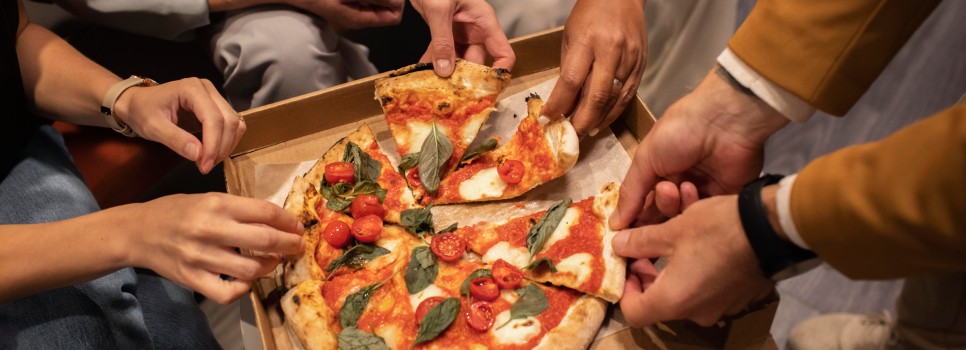
Pizza was not socially accidental. Its very structure, whether deliberately thought out or historically developed, serves to ease the pleasures of sharing between more than one. It forces shared weight on itself. Once received, it throws away of the bonhomie; a slice begins the swapping, stories spin out, and a mobile shared negotiation of desires advances. Where ease and informality are the goal, pizza rules.
Pizza unshackles many constraints that thwart that easy dinner with friends away from dinner and plated service. The pizza party has no drama of coordination for full-course meals, assigned seats, and set courses. Coolly, children or friends are permitted to mosey in late, munch through, take some home, or speed eat. It won't inconvenience the group.
Shared Portions Encourage Participation
Pizza is meant to be divided. Slices are visible, countable, and easy to claim without awkwardness. This creates a low-pressure system of sharing where everyone understands the rules without explanation. No one feels as though they are taking too much or too little, and there is rarely a sense of hierarchy around who eats first.
This shared portioning also lowers the barrier for people who might otherwise feel self-conscious about eating in groups. Picking up a slice is casual and familiar. It does not demand attention or performance. That ease allows conversation to continue uninterrupted, keeping the focus on people rather than plates.
Flexibility Removes Social Pressure
Group meals often struggle with competing preferences and dietary habits. Pizza absorbs this complexity well. Different toppings, crust styles, and portion sizes can coexist in the same order, reducing the need for compromise that leaves someone dissatisfied.
This flexibility matters socially. When people feel accommodated without fuss, they relax. Pizza allows hosts to provide choice without drawing attention to difference, which helps groups feel cohesive rather than divided by preference or restriction.
Minimal Utensils, Minimal Formality
Eating pizza rarely requires explanation or etiquette. Hands are expected. Napkins are sufficient. This lack of formality signals that the gathering itself is informal, even if the topic or occasion is serious.
That signal matters. When people are not worried about how they eat, they are more likely to speak freely and stay present. Pizza supports environments where conversation flows naturally, whether the setting is a living room, office, or shared outdoor space.
Why Pizza Fits Both Celebration and Routine
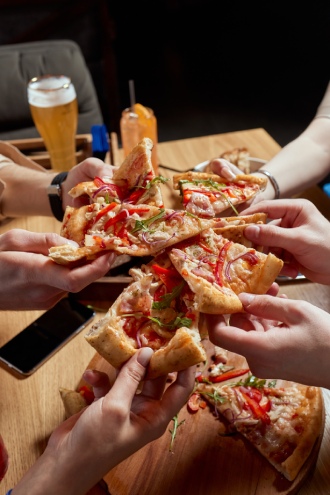
A few foods only see daylight on special occasions while others find their way into our daily routine. One of the foods that lie somewhere between pizza may be seen in a dual role, which for the one single day may exist and would fulfill a function on any ordinary day. Two roles may enhance its definition in social life.
As pizza does not possess words suggesting 'I do this because of that', such adapts in its emotional environment. This quality makes pizza fit into giving pleasure on a successful note, making a loss acceptable, and being the fuel that binds a surrounding time. Their value is modified without their validity being eroded.
Casual Enough for Everyday Moments
Pizza works on unplanned days. It supports spontaneous gatherings, last-minute meetings, and evenings that unfold without structure. Because expectations are low, people feel free to join without preparation or commitment.
This accessibility turns pizza into a default choice when the goal is togetherness rather than spectacle. It becomes a backdrop for conversation, laughter, or quiet companionship, rather than the centre of attention itself.
Reliable for Celebrations Without Ceremony
At the same time, pizza appears at birthdays, graduations, and reunions with equal confidence. It feeds many people efficiently while keeping the atmosphere relaxed. Guests focus on each other rather than formalities or timing.
This balance makes pizza especially useful for celebrations that span ages and personalities. Children, adults, and older guests can all engage with it comfortably, reducing the need to manage different expectations within the same event.
A Neutral Choice That Avoids Conflict
Food choices can carry cultural, emotional, or personal weight. Pizza tends to avoid these tensions. It is familiar enough to feel safe and varied enough to feel considered.
By choosing pizza, hosts often sidestep debates about appropriateness or preference. That neutrality preserves the social focus of the gathering and reduces the chance that food becomes a point of friction.
Pizza in Work, Study, and Informal Meetings
Pizza plays a specific role in professional and semi-professional spaces. It signals a pause from hierarchy without abandoning purpose. This makes it especially common in environments where collaboration matters more than ceremony.
When pizza appears in these settings, it changes how people interact. Titles soften, conversation broadens, and shared eating creates a sense of temporary equality.
Lowering Barriers in Group Settings
In offices and classrooms, pizza removes some of the distance between participants. Eating the same food in the same way creates a subtle sense of shared experience, even when roles differ.
This matters in brainstorming sessions, study groups, or team meetings. When the atmosphere relaxes, people contribute more freely. Pizza supports that shift without requiring explicit effort to change the tone.
Supporting Long Conversations
Pizza accommodates time. It stays edible as people talk, work, or debate. There is no rush to finish before it cools completely, and slices can be picked up as needed.
This makes pizza particularly suited to extended discussions. People can refuel without breaking the flow, keeping energy and attention steady over longer periods.
A Practical Signal of Inclusion
Offering pizza often communicates care without excess. It says that people are expected to stay, participate, and be comfortable. That signal is especially meaningful in group environments where individuals might otherwise feel peripheral.
Because pizza is widely understood and rarely intimidating, it helps newcomers feel included quickly. Sharing food becomes a quiet invitation into the group.
How Pizza Encourages Conversation
Food shapes how people talk. Pizza encourages interaction not through novelty, but through shared familiarity. It creates small moments of exchange that open space for broader conversation.
From choosing slices to commenting on toppings, pizza generates low-stakes dialogue that eases people into interaction.
Built-In Moments of Interaction
Decisions about pizza happen collectively. Questions like how many to order or which flavours to choose invite participation without pressure. These small decisions create early engagement among group members.
Once the food arrives, comments and preferences continue the interaction. These exchanges are simple, but they establish a rhythm of shared attention that supports deeper conversation later.
Comfort Reduces Social Guarding
When people feel physically comfortable, they tend to lower social defences. Pizza contributes to this by being familiar and satisfying without demanding focus.
That comfort allows conversations to move naturally between topics. Serious discussions feel less heavy, and casual talk feels more connected. The food fades into the background while supporting the social dynamic.
Shared Experience Without Performance
Some meals invite commentary or judgement. Pizza rarely does. People are not expected to evaluate it formally or compare it competitively.
This absence of performance frees people to be themselves. Conversation becomes the main event, supported quietly by the shared meal.
The Role of Pizza in Cultural and Family Traditions
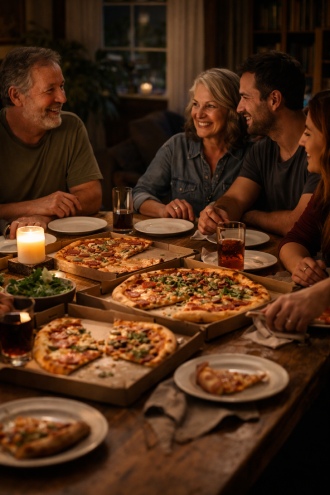
Pizza often anchors routines that define group identity. Weekly orders, family nights, and recurring gatherings build continuity around a shared meal. Over time, pizza becomes part of how groups recognise themselves.
These traditions persist because pizza adapts without losing its core role. It can change with the group while maintaining familiarity.
Ritual Without Rigidity
Regular pizza nights or shared orders create ritual without obligation. The structure is loose enough to accommodate changing schedules and tastes.
This flexibility keeps traditions alive without turning them into burdens. Pizza supports connection through repetition rather than formality.
Cross-Generational Appeal
Few foods bridge age gaps as easily as pizza. Children engage with it intuitively, while adults appreciate its reliability and adaptability.
This shared appeal makes pizza particularly effective in family settings. Everyone participates on equal footing, reinforcing a sense of togetherness across generations.
Memory and Association
Pizza often becomes associated with moments rather than recipes. People remember who they were with, where they were sitting, and what they were talking about.
These associations give pizza emotional weight beyond its ingredients. It becomes a marker of shared time rather than a standalone experience.
One Table, Many Preferences
Pizza’s ability to hold difference without fragmenting the group is central to its social strength. It allows variety while maintaining cohesion, which is not easy for shared food.
This balance makes pizza especially effective in diverse groups where tastes, habits, and expectations vary.
Variety Without Separation
Different pizzas can arrive together, creating choice without isolating individuals. People can eat according to preference while still sharing the same meal.
This matters socially. When everyone eats together, even with different slices, the group remains unified rather than divided by individual plates.
Adaptability to Changing Norms
As eating habits evolve, pizza adjusts. New toppings, alternative bases, and varied formats allow it to remain relevant without abandoning its core structure.
This adaptability keeps pizza socially current. Groups can accommodate change without losing the shared experience that defines the meal.
A Platform Rather Than a Prescription
Pizza does not tell people how to eat or what to value. It offers a platform on which preferences can coexist.
That openness reinforces social harmony. People feel seen without being singled out, which strengthens group cohesion.
When Pizza Becomes the Default Choice
Pizza is often chosen not because it is exciting, but because it works. Its reliability in social settings makes it a safe default when outcomes matter.
This predictability reduces stress for hosts and organisers, allowing them to focus on people rather than logistics.
- Easy to share without planning seating or timing
- Acceptable across age groups and social contexts
- Flexible enough to handle varied preferences
- Comforting without feeling indulgent or formal
After these practical benefits, pizza’s social value becomes clearer. It removes obstacles that might otherwise complicate gathering, making connection the priority rather than the meal itself.
Why Pizza Keeps Showing Up Where People Gather
Pizza’s social success lies in its restraint. It does not demand attention or impose structure. Instead, it supports whatever the gathering needs to be. That quality explains why pizza continues to appear wherever people meet without ceremony. It makes space for conversation, celebration, and presence without insisting on meaning of its own.
People trust pizza to deliver a familiar experience. That trust makes it easier to say yes to invitations and stay longer than planned. When food becomes predictable in a good way, it fades into the background, allowing relationships to take centre stage.
A Food That Makes Space for People
Pizza brings people together, not through spectacle, but through reliability, flexibility, and ease. It helps foster relationships by adding ease as opposed to meanings, making it an apt food for socializing because it remains in the background, allowing people to make each other the focus of attention. For example, when people are used to sitting down to full meals and getting dressed up for formal occasions, pizza, as a simple aggregation, comes to the fore in situations where the answers are to meet up, remain, to while away time together without obstacles.